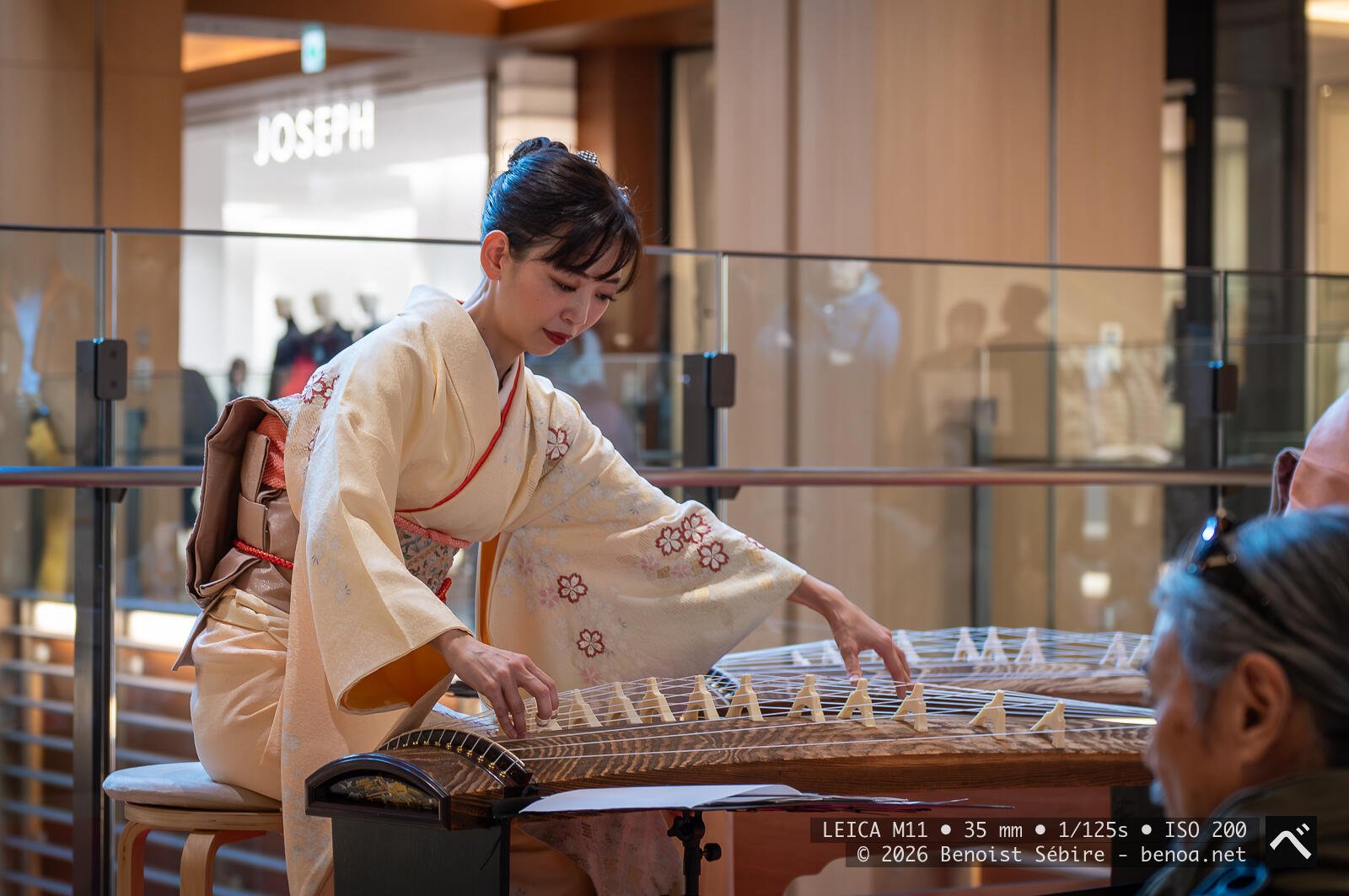
Koto
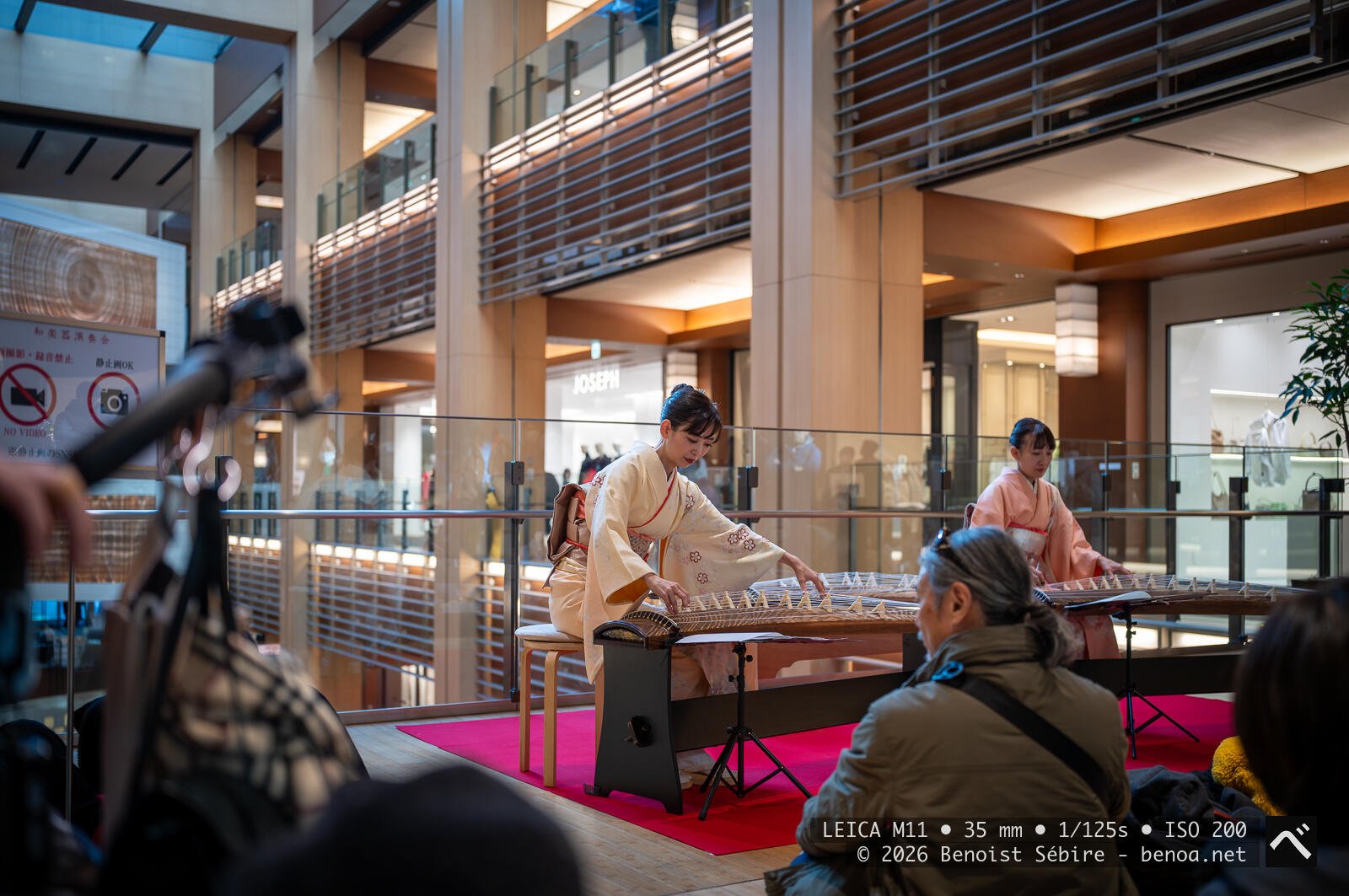
Koto demonstration for the new year in Tokyo Midtown. The koto is a traditional Japanese string instrument with a long, elegant wooden body that looks slightly like a boat that decided to become musical. It usually has thirteen strings stretched over movable bridges, which players shift carefully before performing. This simple detail allows endless variations in tuning, a small act of preparation that feels half ritual, half puzzle.
The koto produces a sound that is clean, bright, and quietly emotional. Notes ring out and fade with a gentle shimmer, often compared to flowing water or wind moving through reeds. Performers pluck the strings using picks worn on the fingers, giving the music a crisp edge that balances delicacy with confidence. It looks calm, though the fingers are working harder than they let on.
The instrument arrived in Japan from China over a thousand years ago and slowly found a home in court music before spreading beyond palaces. For centuries it was associated with refinement, poetry, and long afternoons spent perfecting one passage while tea went cold nearby. In modern times, the koto has wandered into jazz, pop, and film scores, proving it can adapt without losing its character.
Thanks to the resolving power of the M11’s 60-megapixel sensor, let’s move a little closer, using the same shot as above, simply cropped a bit tighter.